
Meet us at the Anaheim Trade and Manufacturing Show Booth #216

Capability

Coaxial and RF cable assemblies built for signal integrity.

Coax terminations punish sloppy process. We build RF and coaxial assemblies to a documented method — controlled prep, correct dies, calibrated torque, verified shield continuity — so performance is consistent across the entire lot, not just the first unit.

Coaxial and RF cable assemblies with precision connectors

Capabilities & standards

  • SMA, SMB, BNC, TNC, N-Type, and MCX terminations
  • Crimp and solder coax construction to your specification
  • Controlled center-conductor protrusion and braid preparation
  • Calibrated torque on threaded RF interfaces
  • Shield and drain wire continuity verification
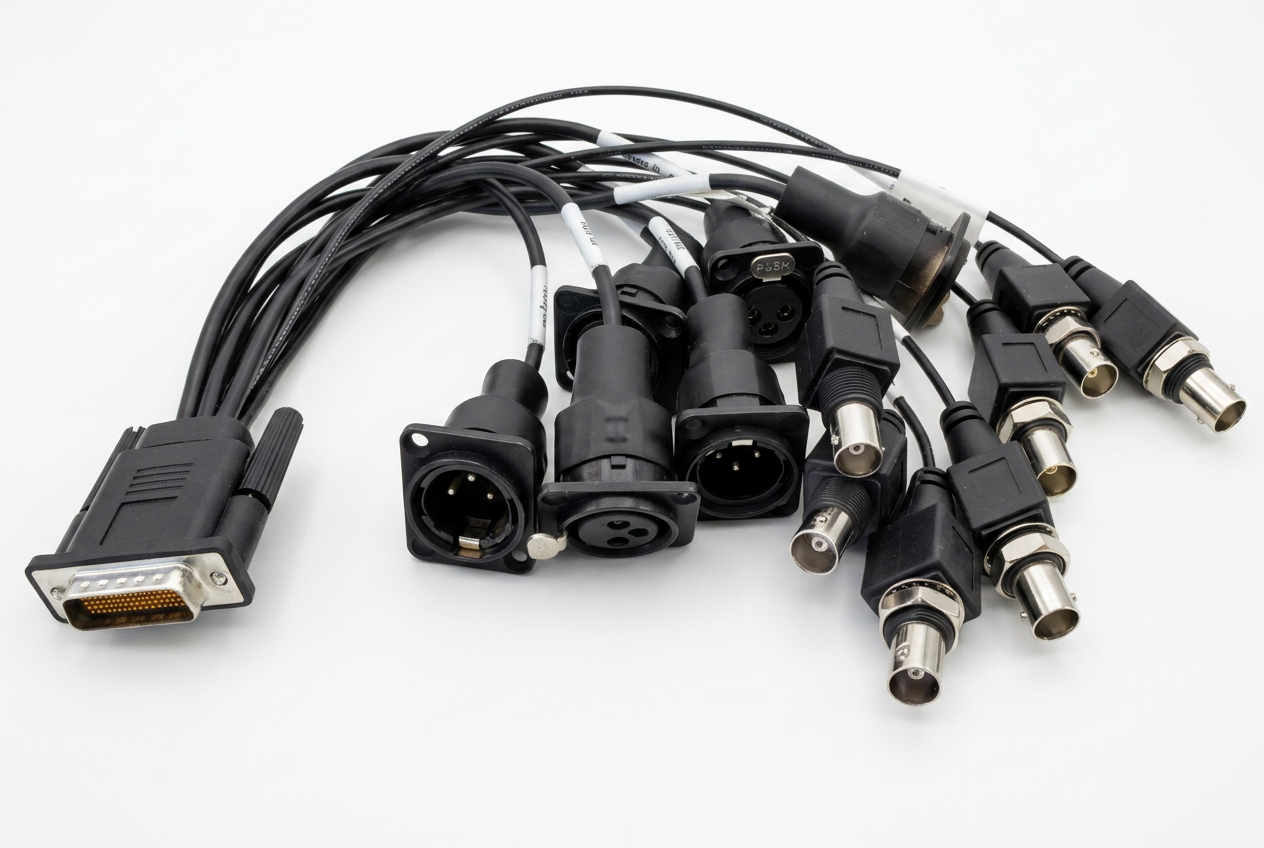
  • Hybrid assemblies combining coax, power, and signal
ISO 9001:2015IPC/WHMA-A-620Made in USA
Request a quote

Why coax assemblies fail, and what we do about it

The usual causes are unglamorous: braid strands left long and shorting to center, inconsistent dielectric or center-conductor length, the wrong die on the ferrule, or an interface torqued by feel. Each one produces intermittent behavior that is expensive to diagnose once the assembly is inside a system.

Our answer is process rather than heroics. Prep dimensions are documented per cable and connector combination, tooling is matched and verified, torque is applied with calibrated wrenches, and every unit is inspected against IPC/WHMA-A-620 acceptance criteria before test.

Cable and connector combinations reviewed up front

We build to the cable type and connector series you specify. Part of our build review is confirming the two actually belong together — the right ferrule for that braid and jacket, the right contact for that center conductor, the right strain relief for that jacket diameter.

When a callout will not work, or a specified part is obsolete, you hear about it during quoting. Nothing gets quietly substituted on the floor.

Coax inside larger assemblies

Plenty of real systems need coax bundled with power and low-level signal in a single harness, often terminating into a mil-spec circular or a rectangular multi-pin connector. We build those hybrid assemblies routinely, managing bend radius, shield termination, and separation so the RF path is not compromised by its neighbors.

Sleeving, spiral wrap, and overmolded transitions are applied where the routing environment requires them.

Communications, test, and defense applications

This work supports telecom and broadcast infrastructure, antenna and radio installations, test and measurement equipment, and defense-adjacent platforms where a marginal interface is not acceptable.

Send a drawing, a cable and connector list, or a sample assembly. Uploads are accepted 24/7 and our USA-based Sales team responds during business hours.

FAQ

Common questions

Which coaxial connector series do you terminate?

SMA, SMB, BNC, TNC, N-Type, MCX, and related series in both crimp and solder configurations, plus mil-spec circulars carrying coax contacts.

Do you build to a specified cable type?

Yes. We build to the cable you call out and verify the connector is correct for that cable. If the combination will not perform, we raise it before manufacturing.

Do you control torque on RF interfaces?

Yes. RF interfaces are torqued to specification with calibrated tooling, because hand-tight or over-torqued interfaces are a common source of field failures.

Can you build coax into a larger harness?

Regularly. Hybrid assemblies combining coax, power, and signal conductors in one harness are a normal part of our work.

Do you perform electrical testing on coax assemblies?

Continuity and shield continuity are standard. Additional testing is performed to your written acceptance criteria.

Ready to spec your build?

Send drawings or a BOM 24/7 — our USA-based Sales team responds during business hours.

Talk to Sales